
Does this scenario sound familiar to you?
It’s a cold evening, you’re settled in with the family, and out of nowhere, a chill creeps into the room. You check the radiator, and it’s on. So then, what’s the issue?
More often than not, the culprit is a draughty window. And the good news is that you don’t need to spend a fortune to fix it. There are plenty of simple things you can try today to prevent draughts from your windows.
Why Do Windows Get Draughty?
It’s no secret that windows don’t last forever. Over time, the seals around them wear down, and gaps start to appear. Timber frames can wrap and shrink, especially in older homes.
Even uPVC window frames can loosen or crack with age. Weather plays a big part, too. Years of rain, frost, and heat take their toll. The result is small gaps that let cold air sneak in.
It’s gradual, so you may not notice straight away. But your heating bill certainly will.
How to Spot a Draught
Before you fix anything, you need to find the problem first. Here are a few easy ways to check:
- The candle test: Hold a lit candle near the window edges on a windy day. If the flame flickers, air is getting in.
- The hand test: Run your hand slowly around the window frame. You’ll often feel a chill even without a candle.
- Check visually: Look for cracked caulk, gaps between the frame and wall, or worn seals around the edges.
Once you know where the draught is coming from, fixing it becomes a lot easier.
7 Ways to Stop Draughty Windows
So, you’ve found the draught. Now let’s fix it.
Fortunately for you, most of these solutions are cheap, easy, and something you can do yourself this weekend – however, if the double glazing has blown, then you’ll need to do more than simply patch the issues as below.
Put Up Thicker Curtains
This trick is simple, and it works. Thicker curtains act as a barrier between the cold air and your living space.
Be sure to look for thermal-lined curtains as they offer the best insulation. They trap a layer of air between the glass and the room.
We recommend floor-length curtains as they work best. The closer they sit to the floor, the less cold air can sneak underneath.
It’s an affordable fix, and they look great, too. A win on both fronts!
Apply Window Film
Window film is a thin, transparent layer that sticks directly onto the glass. It helps reflect heat back into the room while still letting natural light through.
You apply window film with a spray bottle and a squeegee. It’s straightforward, and you can peel it off cleanly when you no longer need it. Some films even offer UV protection, helping reduce fading on your furniture and fabrics over time.
This is a great option if you want a barely noticeable fix, and they work on both upvc and aluminium windows on even the draughtiest Scotland day.
Use Foam or Brush Strips
These are ideal if you still need your windows to open and close. You fit them around the edges of the frame to block the gaps.
Foam strips are the cheapest option and are easy to find in any DIY shop. Brush strips cost a little more but last longer and keep dust out as well. For a window you use daily, brush strips are worth the small extra investment.
Re-Caulk Around the Frame
Over time, caulk cracks and shrinks. When that happens, cold air finds its way inside your home.
We recommend taking a walk around your house and inspecting the caulking on each window. If it looks old or cracked, it’s time to replace it.
You can then pick up a tube of silicone sealant for just a few pounds. Remove the old caulk first, then apply a fresh, clean bead of sealant. It’s a simple and very effective fix!
A caulk gun makes the job much neater, and you can pick one up for around £6 at most DIY shops.
Fill Gaps Between the Frame and Wall
This one is often overlooked. The gap between the window frame and the surrounding masonry is a common entry point for cold air. You can fill it with silicone sealant or expanding filler.
Either option is cheap and easy to apply. Once it sets, that gap is gone for good. It’s one of those small jobs that makes a surprisingly big difference to how warm a room feels.
Make a Draught Snake
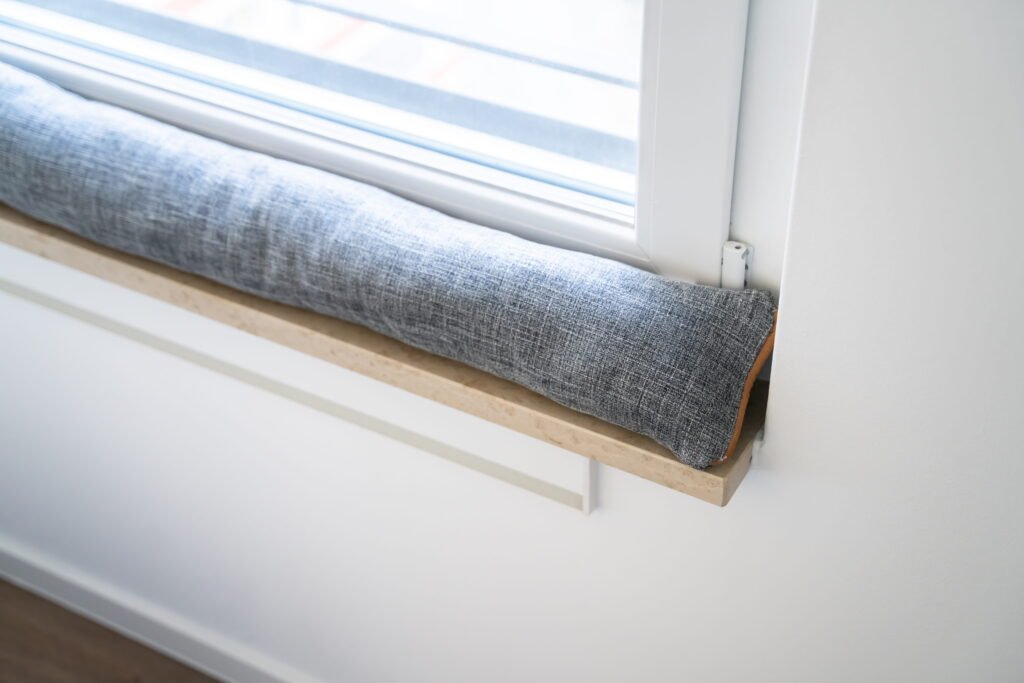
A draught snake sits along the windowsill and blocks cold air from creeping in along the bottom edge. You can buy them ready-made or make one yourself.
For example, old socks, tights, or a spare towel stuffed with rice will do the job perfectly. It’s a budget-friendly option and a good one to keep in your back pocket. Sure, it’s not the most glamorous fix, but it works in a pinch.
Try a Window Insulator Kit
These kits come with everything you need in one box. You get a clear plastic film along with double-sided tape to fix it neatly around the frame.
Once applied, it creates an extra layer of insulation without blocking your view. They’re widely available online and in DIY shops across the UK.
So, if you want a tidy, all-in-one solution without any guesswork, this is a great place to start.
Quick Comparison: Which Fix Is Right for You?
Still not sure where to begin? This table will break it down to you at a glance:
| Fix | Approximate Cost | DIY Friendly | Best For |
|---|---|---|---|
| Thicker curtains | £20-£60 | Yes | Quick, everyday warmth |
| Window film | £5-£15 | Yes | Barely noticeable insulation |
| Foam or brush strips | £3-£10 | Yes | Windows you open regularly |
| Re-caulking | £5-£12 | Yes | Cracked or ageing seals |
| Frame and wall gaps | £4-£10 | Yes | Older or settled properties |
| Draught Snake | £0-£10 | Yes | Budget-friendly bottom edge fix |
| Window insulator kit | £8-£20 | Yes | All-in-one tidy solution |
When to Call a Professional
The aforementioned fixes will handle most draughty windows. But sometimes the problem runs a little deeper. Here are a few signs that it’s worth calling someone in, like our double glazing Hamilton window team at MLR:
- Warped or damaged frames that no longer sit flush and can’t be fixed with strips or sealant
- Older timber or sash windows that need specialist attention without losing their character
- Persistent draughts that keep coming back, no matter what you try
- Visible damage to the frame, glass, or surrounding masonry that needs proper assessment
In these cases, a professional can carry out a proper inspection and recommend the right course of action.
Sometimes a repair is all that’s needed. Other times, a replacement makes more sense long term. Either way, getting expert eyes on the problem saves you time, money, and frustration down the line.
Final Thoughts
Draughty windows are frustrating, but they’re rarely a lost cause. Start with the simple fixes and work your way up from there. And if you ever need a hand, MLR Maintenance is just a call away. We’re here to help.
Our team handles exactly this kind of work. Get in touch with us today, and we’ll help you figure out the best solution for your home.