
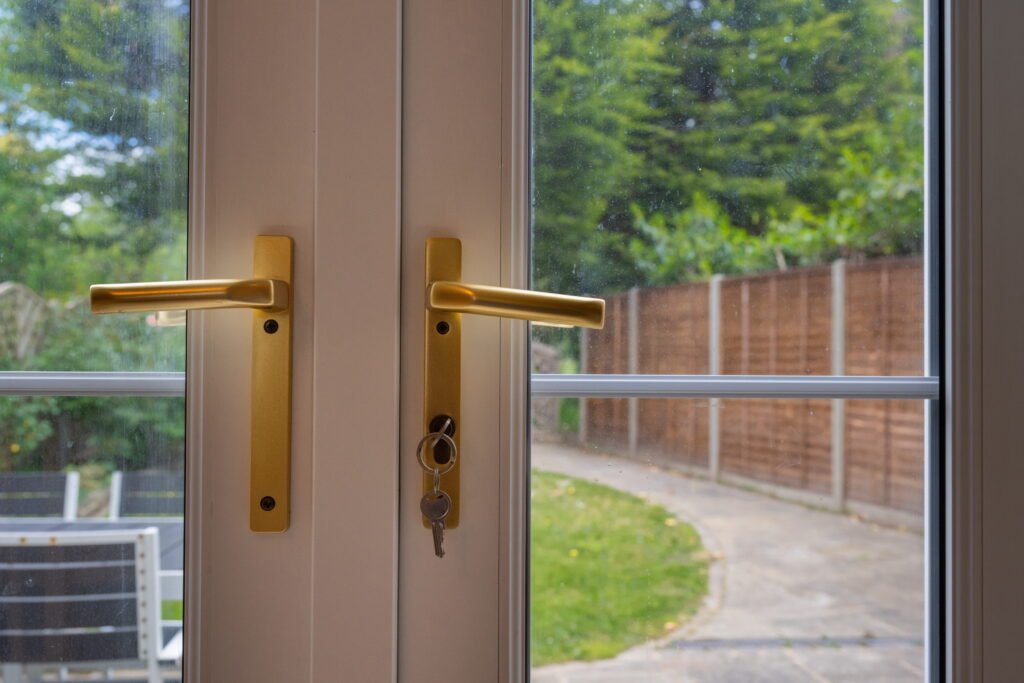
Thinking of transforming a massive window into a set of French doors to improve access to your patio or deck? Or are you contemplating installing them into a wall with no existing openings?
In any case, a homeowner might first wonder: do you need planning permission for French doors in Scotland?
Installing French doors doesn’t require Planning Permission, as it falls under permitted development rights. That’s the general rule; yet some factors such as location, property type, and extent of alteration can influence whether you’ll need Planning Permission.
This blog post specifies when Planning Permission for French doors is needed, when it isn’t, and factors that determine the case. It also addresses UK Building Regulations, picking the right French doors for your home, and related topics.
In What Cases Do You Not Need Planning Permission to Install French Doors?
The situations where you might not need planning permission for French doors include:
- If they’ll be installed towards the rear or side elevation of your property (parts that don’t face the road)
- If they’ll be created in a property that isn’t listed
- If they don’t dramatically transform the appearance of the house
- If their installation complies with UK Building Regulations and local codes
- If your property isn’t bound by special planning restrictions, as is the case in historical areas, buildings with architectural value, private communities and compounds where homes must keep a uniform look, etc.
When Might You Require Planning Permission for French Doors?
Only a few specific situations may warrant planning permission for French doors:
1. Flats, Maisonettes, and Commercial Properties
Unlike houses, flats, maisonettes, and commercial buildings aren’t covered by permitted development rights, so you’ll need planning permission if you want to install French doors in any of those residences.
Similarly, you can’t make alterations to external walls and windows without the proper documents.
2. Listed Buildings
Listed Building Consent is required for creating French doors in listed buildings due to their historical and architectural relevance.
Here, planning regulations are often stringent. Failing to get planning permission could result in sizable fines and spending hefty sums on restoration.
3. Properties Subject to Article 4 Directions
If your property falls under Article 4 Directions, local authorities have control over your permitted development rights, even for seemingly minor changes, like installing French doors.
4. Buildings in Conservation Areas
You’ll likely need approval from the designated authorities if your house is located in a conservation area. These areas are protected by building codes that aim to preserve their natural, historical, or architectural features.
Changing the external appearance of your home can interfere with their goals, which is why you may need planning permission.
Even if the installation of French doors is part of a bigger project in this area, it’s better to play it safe and contact local planning authorities before implementation.
What Are Some Factors That Affect Whether Planning Permission Is Required?
The factors that influence planning permission for installing French doors are:
- Building/property type: Houses vs. flats, maisonettes, commercial establishments, or listed buildings
- Building/property location: Regular neighbourhoods and communities vs. Areas of Outstanding Natural Beauty, conservation areas, national parks, and historical sites
- Local building codes and policies: Any restrictions or specific policies placed on external home alterations by local councils influence planning permission requirements
- Scale and extent of alteration: Replacing existing patio or balcony doors (or windows) is different from creating a new opening in an exterior wall (the latter may need approval)
- Additional construction work: Sometimes the installation of French doors isn’t the issue, but constructing a raised platform, steps, or a balcony to go with it is what requires planning permission.
Can You Replace a Large Window With French Doors Without Planning Permission?
Planning permission may not be needed for replacing a window with French doors leading into an exterior deck, balcony, or garden if they’ll be facing the back of the house.
However, you must keep in mind that this project still necessitates widening the opening in your wall. This alteration might affect your wall’s structural integrity and, therefore, compliance with UK building regulations.
It’s advisable to assess this project as an individual case and check with your local authorities to ensure adherence to building codes.
How to Check if You Need Planning Permission for French Doors?
If you’re still uncertain whether your home project requires planning permission approval, you can follow these steps to find out:
- Check any restrictions that may be placed on your property (if it’s listed, belongs in a conservation area, or adheres to Article 4 Directions).
- Consult local planning authorities for guidance on permitted development rights and where your home project fits on their spectrum.
- Get in touch with a professional French doors installer, have them inspect your property, and get their expert advice on UK Building Regulations requirements.
- If you’re planning to sell your property sometime in the future, you may want to request a Lawful Development Certificate that confirms your project is legal.
What UK Building Regulations Must You Adhere to When Installing French Doors?
Even if this home improvement project doesn’t call for planning permission in Scotland, you still have to comply with UK Building Regulations before installing French doors. You may need Building Regulations approval after all, depending on the scope of your work.
Here are some rules you must adhere to:
- French doors should meet energy efficiency standards when it comes to heat loss, glazing performance, and insulation.
- Taking down parts of your external wall, or even just making your window opening bigger, may require additional support before installing your French doors for adequate load distribution.
- The glass you choose for your French doors must follow UK safety regulations; properly laminated and strengthened.
- Finally, UK Building Regulations take into account escape routes and ventilation standards when making such adjustments to your home.
Thankfully, by hiring a reputable French door installer in Scotland, you take much guesswork out of the equation. Services include assessing your property, ensuring the glass and structure of your new doors meet safety guidelines, and all other aspects of the installation process.
What to Keep in Mind to Pick the Right French Doors for Your Property?
After getting the question of whether your French door installation needs planning permission out of the way, how do you go about choosing the ideal product for your needs?
Think about:
- Security features
- Glazing options
- Ease of cleaning and maintenance
- Colours, designs, and styles that match the interior and exterior of your property
- Frame material durability and longevity
- Energy efficiency ratings
MLR Maintenance for French Doors in Scotland
Looking for a Scotland-based French door maker to help you balance aesthetic requirements with structural and ventilation considerations while adhering to local codes?
At MLR Maintenance, you get to choose from a wide range of French door materials (aluminium, uPVC, and composite) to meet your design goals. Pick from various finishes and coats, colours, glazing options, styles, and hardware components to bring out your rooms’ best features.
Our French doors don’t compromise security in favour of looks; they’re sturdy, free of weak spots, and reinforced with multi-point locking systems. We also use toughened glass, which is five times more durable than regular glass.
Conclusion about Planning Permission
Generally, homeowners don’t need planning permission for French doors in Scotland. This works if their properties aren’t listed or located in a conservation area and if the modifications take place towards the rear of the houses.
Still, planning permission may be required in case you’re living in a flat, or your home is subject to Article 4 Directions, and other specific situations mentioned earlier.
To be 100% sure whether your home needs planning permission, it’s best to contact local authorities about your concerns to avoid hefty fines in the future.
For expert guidance on French door sourcing and installation in Central Scotland, call or visit MLR Maintenance.
Based in Hamilton and backed by ten years of experience, our services cover everything from installing bespoke windows and doors to energy-efficient solutions and affordable finance options.
FAQs
What other home features can you build without planning permission in Scotland?
Some minor features you may add to your home without planning permission include:
- Garden sheds that comply with height and size regulations
- Single-storey rear extensions
- Some garage modifications
- Small porches
- Greenhouses
- Boundary walls or fences, as long as they don’t exceed limits
What needs planning permission in Scotland?
Most major home improvement projects will require planning permission, such as:
- Balconies
- Decks or platforms that rise to significant heights above the ground
- Multi-storey home extensions
- Wind turbines
- Roof terraces
- Overly high fences or gates in front of the house’s main elevation
What happens if you fail to obtain planning permission for a project that needs it?
Not obtaining planning permission isn’t a criminal offence, but it exposes you to many unwelcome consequences.
For starters, your local authorities may order you to stop work on your project, usually followed by an official notice to undo the changes you’ve made. People who ignore such notices could face considerable fines or be taken to court.