
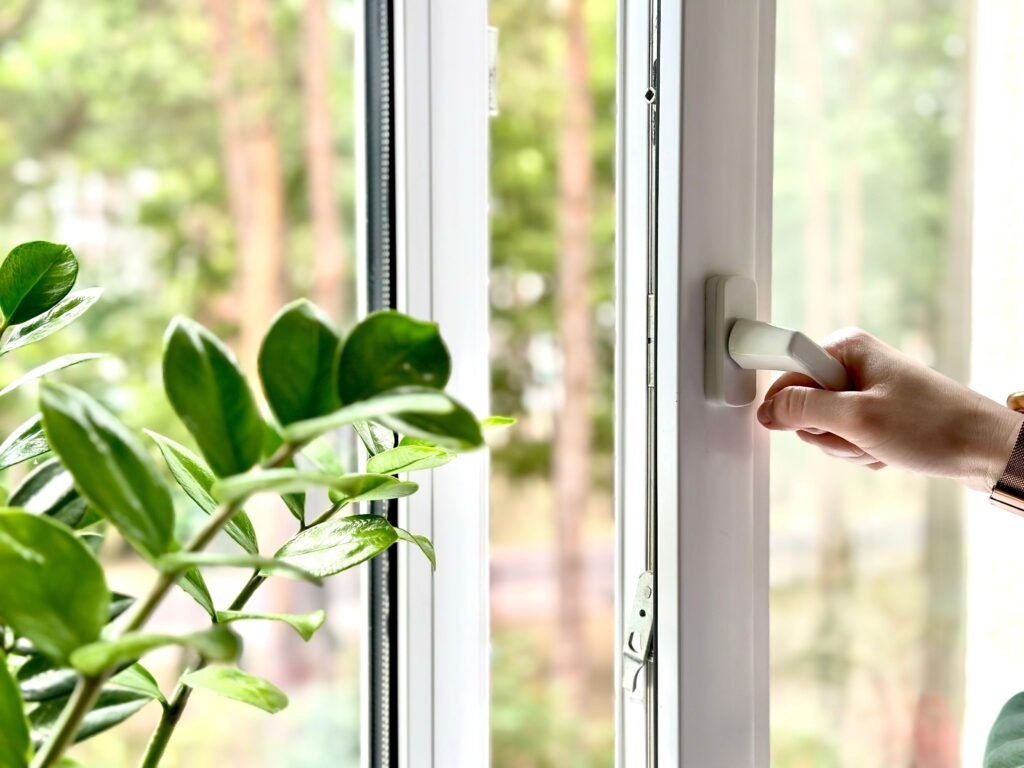
A window that refuses to close is more than a household irritation. It immediately compromises your home’s security, invites the worst of the weather in, and can send your energy bills soaring as heat escapes.
When you’re staring at a stuck sash or a handle that spins uselessly, the temptation is to force it shut. Please don’t. Applying brute force risks shattering the glass, bending hinges, or snapping the locking mechanism entirely, potentially turning a minor fix into an expensive replacement.
The good news is, more often than not, the root cause is something you can fix or at least diagnose.
In this simple guide, we’ll walk you through what you need to do and when to let a professional take over because sometimes, there’s simply no way around.
So, the window is stuck open. Start with these two steps:
Step 1: Secure the Opening Temporarily
Before you tackle the mechanics, make the window safe. If it’s stuck fully open or just a crack ajar, you need to protect the room from rain, draughts, and unwanted visitors.
- Cut a sheet of thick cardboard or plywood to fit the gap and tape it firmly in place.
- If the window is stuck in the night-vent position, stuff the gap with a rolled-up towel or draught excluder.
- For ground-floor windows, consider a temporary screw-in window lock or a wooden dowel cut to length and wedged into the track to prevent it from opening further.
Note: If you have to leave the house before it’s fixed, move valuables out of sight and lock the internal door to that room.
Step 2: Identify Your Window Type
The fix depends entirely on how your window operates. In Scottish homes, the three most common types are:
- uPVC casement windows Glasgow: Hinged at the side or top, operated by a handle that engages multiple locking points (the espagnolette system).
- Timber box sash windows: Two sliding panels balanced by hidden weights on cords, or newer spiral spring balances.
- Tilt and turn windows: Operated by a single handle that either swings the sash inward like a door, or tilts the top inwards for ventilation.
Once you know your type, you can zero in on the most likely problem.
Common Causes and Quick-Reference Fixes
Use this table to match your symptom to a probable cause and a potential DIY solution.
| Problem | Likely Cause | DIY Fix |
|---|---|---|
| Handle spins without resistance | Gearbox or spindle stripped | Replace handle or lock mechanism |
| Window hits frame but won’t lock | Misalignment, dropped sash | Realign by toe and heeling, adjust hinges |
| Sash won’t move at all | Painted shut, dirt in track, swollen timber | Cut paint seal, clean track, sand swollen edges |
| Handle is stiff and hard to turn | Dried-out locking points or hinges | Lubricate with silicone spray |
| Window tilts inwards but won’t seat back | Tilt latch not re-engaging | Manually reset the latch, realign sash |
| One side closes, but the other stays ajar | Hinge screws loose or worn | Tighten screws, replace hinge if bent |
Now that you know what’s going on, you can either hire a professional or go the DIY route. Let’s start with latter,
Scenario 1: How to Fix a uPVC Casement Window
uPVC windows are workhorses of modern British homes, but their multi-point locks and adjustable hinges do require occasional attention.
1. Lubricate the Mechanism First
In many cases, a stiff handle or a lock that won’t fully throw is simply due to dry, grimy moving parts. Spray a silicone-based lubricant (not WD-40, which attracts dirt) into the locking points around the sash edge while working the handle up and down. Wipe any excess.
2. Realign the Window (Toe and Heeling)
A uPVC window that drops slightly so the corner catches on the frame is said to have lost its “toe and heel.” This is corrected by adjusting the window in its frame.
- Open the window and locate the small plastic or metal packers (shims) between the glass unit and the sash at the bottom corners.
- If you can see they’ve slipped, or if the glass sits unevenly, the glass unit needs re-packing. This is a two-person job: remove the glazing beads, carefully lift and re-centre the glass with new packers to square the sash, then replace the beads.
- Often, you can avoid removing the glass by adjusting the hinges instead.
3. Adjust the Hinges
- Modern uPVC friction hinges have lateral and height adjustment slots.
- Look for the small slotted cam on the hinge plate (often located on the frame-side hinge).
- Using a Phillips or flathead screwdriver, turn the cam slightly to raise or lower the sash corner. One full turn can move the sash by around 1-2mm.
- On the bottom hinge, you’ll often find a similar cam for side-to-side adjustment. Small tweaks make a big difference. Make quarter-turn adjustments, test the closing, and repeat until the sash seals evenly.
Scenario 2: Fixing a Stuck Timber Sash Window
Traditional box sash windows can shut perfectly for decades and then suddenly refuse to budge. The culprits are usually paint, broken cords, or swollen wood.
Painted Shut
This is extremely common in period properties. Decades of gloss paint can weld the sash to the frame.
- Run a sharp utility knife or a dedicated paint zipper along the gap where the sash meets the frame, the staff bead, and the windowsill.
- Gently tap a wide putty knife into the gap from the inside and prize it free, working your way along the entire perimeter. Do not use a chisel, as it will damage the wood.
- Once cracked free, sand the edges lightly and rub a candle stub or dry silicone lubricant into the contact surfaces to prevent it sticking again.
Broken Sash Cord or Spiral Balance
If one side of the sash drops when you try to lift it, or the window tilts dangerously, a sash cord has snapped, or a spiral balance has failed.
- Cords: Access the weight pocket by removing the staff bead and parting bead. Re-threading the new sash cord and rebalancing the weight is a fiddly job. If you’re not confident, call a professional – the sash is heavy, and the weights are contained within the frame.
- Spiral balances: Modern replacement windows with spiral balances can be re-tensioned via a small twist mechanism in the side channel. Over-tightening can break the spring, so turn in small increments.
Scenario 3: Tilt and Turn Windows
Tilt and turn windows are brilliantly versatile but can jam in the tilt position if the mechanism is not perfectly synchronised.
- Check the corner pivots: The sash has a small metal latch at the bottom corner that must click positively into the frame. Sometimes it sticks. Press it in manually while gently pushing the sash flat.
- Reset the handle: With the window dangling in tilt mode, try moving the handle to the fully closed (usually downward) position, then back to the open (sideways) position while supporting the sash. This often resets the internal mechanism.
- Lubricate the hinge gearing: A dry mechanism will fight you. Apply silicone lubricant to all visible metal hinge points around the frame and the top pivots.
When to Call a Professional
Some problems go beyond a DIY fix and require a skilled tradesperson to avoid injury or further damage.
- The glass pane is cracked or blown (moisture between the panes).
- The wooden frame is rotten, or the window has come away from the brickwork.
- The spiral balance, sash cord, or heavy counterweight spring has failed.
- The uPVC window has a seized, non-serviceable multi-point lock that needs full replacement.
- The window is on an upper floor and requires safe ladder access.
As double glazing Hamilton experts, we specialise in window repairs across Scotland , from delicate sash cord replacements to complete hinge overhauls on stubborn uPVC casements.
Need a Helping Hand?
If your window still refuses to close despite your best efforts, don’t risk a sleepless night worrying about security or heat loss.
Our experienced team at MLR Maintenance is on hand to diagnose the fault and get your windows operating perfectly again, restoring the comfort and safety of your home.
Contact us today for a friendly, no-obligation chat or to book a local repair visit.